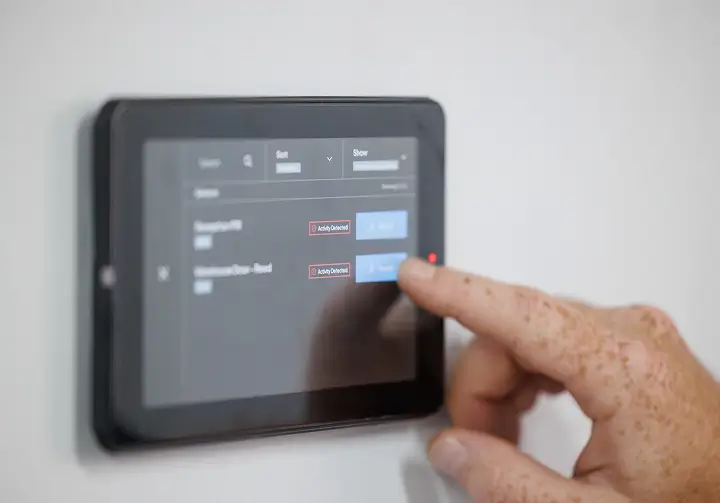
A commercial door access control system replaces keys with a controlled method, such as a card, fob, keypad code, or fingerprint, so you can decide exactly who can open which door and when. On a commercial or industrial site it usually works alongside your alarm and CCTV systems rather than as a standalone product.
What a door access control system actually does
A door access control system replaces a physical key with something that can be issued, changed, and switched off without re-keying the building. Every commercial system does three things: it decides who can open a door, it logs when they did, and it lets you change or revoke access the moment someone leaves the business or changes role. That last part is the one most property managers underestimate until the day a key can’t be found or a tenant moves out and every lock needs replacing.
The main types used on commercial sites
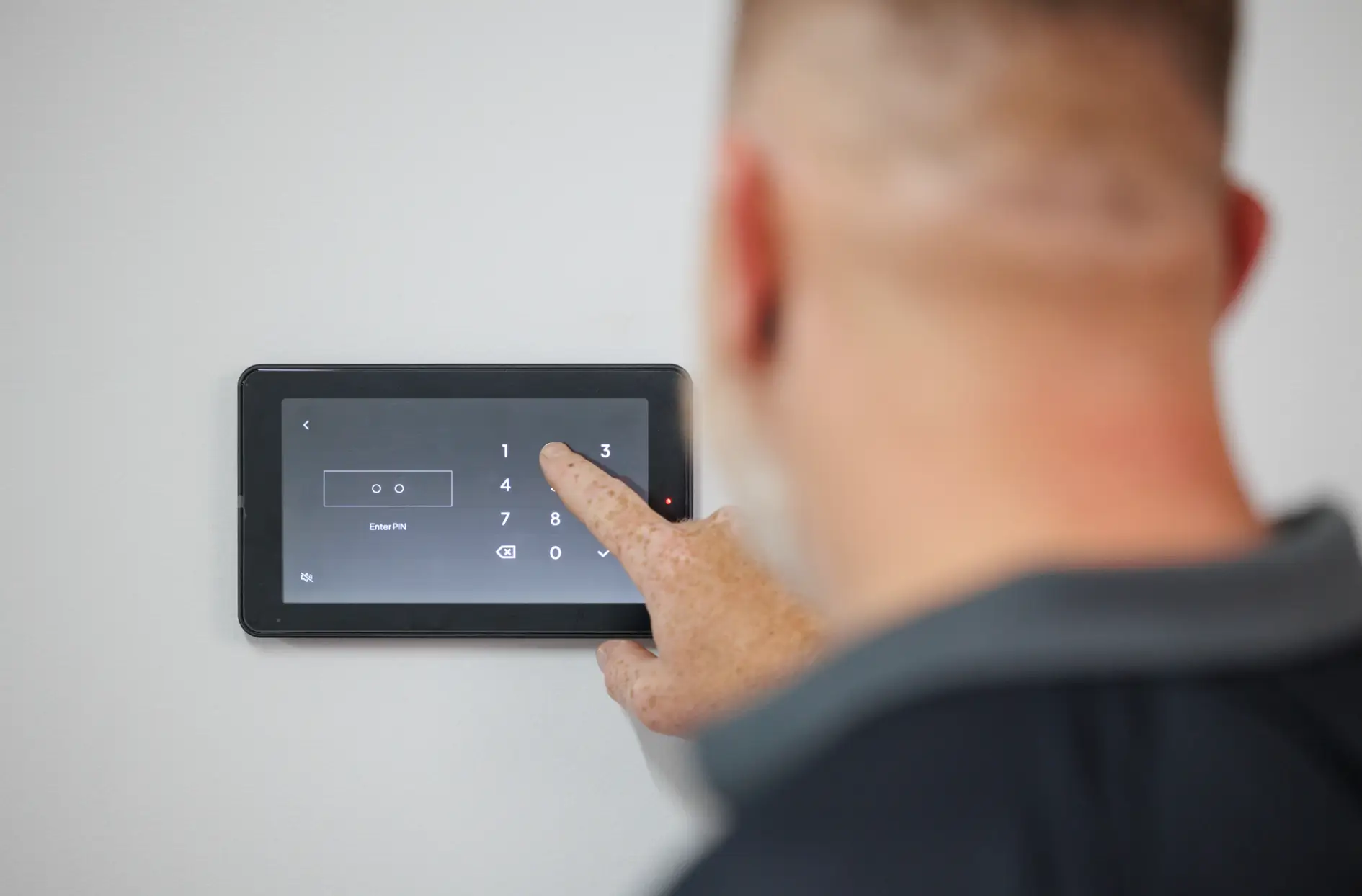
Card and fob access is the most common option for offices and multi-tenant buildings, since each card or fob is tied to a person and access can be added or removed individually. Keypad entry works well on lower-traffic areas like a plant room or loading dock, though it’s weaker on accountability since a shared code isn’t tied to one person. Biometric access, such as a fingerprint, tends to suit specific high-value or restricted doors rather than an entire building. On industrial sites, door access is often paired with vehicle or gate access so the same system covers people and vehicles moving through the site.
Most commercial buildings end up using a mix rather than one method for every door: card access for general entry, a keypad for a low-risk service door, and biometric or restricted card access for anything genuinely sensitive.
Matching the system to your building
A single-tenant office with two or three doors rarely needs more than fob or keypad access on the main entries. A multi-tenant building is a different problem: each tenancy needs its own access group and its own audit trail, and shared areas like lifts and common doors need a layer that sits across all tenants. Warehouses and industrial sites add a third dimension again, because doors are only part of the picture; vehicle and dock access usually need to be controlled at the same time.
The practical test is not “what’s the most advanced option” but what this specific site actually needs controlled, and by whom. A system that’s harder to manage than the risk it’s solving ends up ignored, propped doors and shared codes included.
How it fits with your alarm and CCTV
On most commercial sites, access control isn’t installed in isolation. It sits alongside the alarm system that arms and disarms the building and the CCTV that records what happens at each entry point. Treated as one system, an access event, an alarm state, and camera footage can all be read together, which is what actually gives a property manager a usable audit trail after an incident, rather than three separate logs that don’t line up.
What to check before you specify one
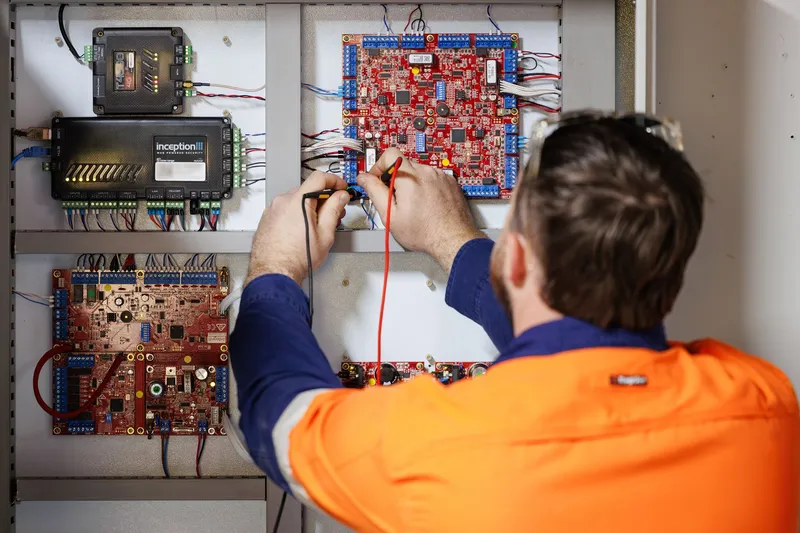
Before choosing a system, it’s worth having clear answers to a few practical questions: how many doors and tenancies actually need controlling, who needs to see or export the access log and how often, whether after-hours access needs to be managed differently to business hours, and whether the system needs to integrate with alarm and CCTV you already have or are planning. A licensed installer who handles access control, alarms, and CCTV in-house can usually answer the integration question more directly than one who only handles access control.
FAQ
Does a commercial access control system replace an alarm system?
No. Access control manages who can open which door and when. An alarm system detects intrusion and arms or disarms the building. Most commercial sites run both together rather than treating one as a substitute for the other.
Can an existing building be retrofitted with access control?
Yes, in most cases. The scope depends on the number of doors, existing wiring, and whether the building already has any electronic locking hardware to build on.
Do all doors in a building need the same type of access control?
No. It’s common and practical to mix methods: card or fob access for general entry, a keypad for a low-risk service door, and biometric access reserved for genuinely restricted areas.
If you’re weighing up options for a commercial or industrial site in Newcastle or the Hunter, Eastlakes Security can walk through what your building actually needs, including how it would sit alongside any alarm or CCTV system already in place, before you commit to a specific setup.

Ready to Strengthen Your Security?
Speak with the Eastlakes Security and Controls team to discuss tailored security solutions designed to protect your people, property and operations with reliable technology and professional support.
Request a Quote