A commercial security alarm system differs from a basic intruder alarm in three ways: it’s designed around the specific building rather than a generic sensor kit, it’s connected to a defined monitoring arrangement rather than left to notify an app, and it’s maintained on a schedule rather than only repaired when something fails.
Security Alarm Systems for Commercial Premises: What’s Different from a Basic Alarm
A commercial security alarm system differs from a basic intruder alarm in three ways: it’s designed around the specific building rather than a generic sensor kit, it’s connected to a defined monitoring arrangement rather than left to notify an app, and it’s maintained on a schedule rather than only repaired when something fails.
What actually separates commercial from basic
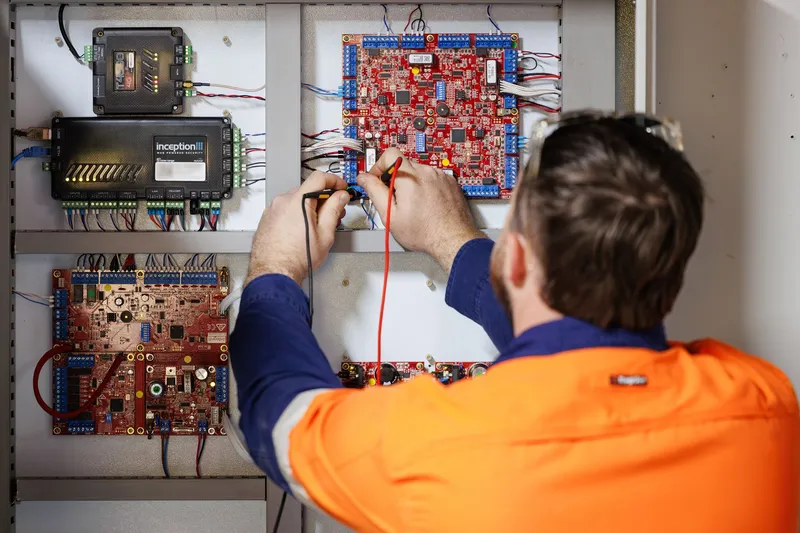
A basic alarm, the kind sold for a house, is built around a small, fairly standard set of sensors and a siren, sometimes with app notifications instead of any professional monitoring. A commercial system starts from the building: how many zones it needs, which areas justify sensors versus which don’t, how staff and after-hours access should interact with the alarm, and how the system talks to any other security equipment on site, such as CCTV or access control. The result looks similar on the surface, a control panel and some sensors, but the design work behind it is where the real difference sits.
Monitoring: what “monitored” should mean for a business
“Monitored” gets used loosely. For a commercial site, it should mean the alarm signal goes to a monitoring centre that can assess the alert and take the appropriate next step, not just a notification on someone’s phone that may or may not get seen. Eastlakes installs and maintains alarm systems in-house, with monitoring itself handled by a specialist monitoring partner, so the two functions, install and maintenance, and monitoring response, are each done by whoever is set up to do that job properly, rather than one team trying to do both.
Why false alarms usually come down to design, not sensitivity
A site with frequent false alarms is rarely a case of the sensors being too sensitive. More often it’s a sensor placed where normal activity, a loading dock door, an air-conditioning unit, foot traffic in a warehouse, will regularly trigger it. Fixing that is a design and placement problem: reviewing zoning, adjusting sensor placement or type, and correcting arm and disarm schedules so the system isn’t armed while people are still meant to be moving through the area.
Why preventative maintenance matters
A lot of the market has moved to reactive-only maintenance, where nobody looks at the system until it fails or triggers a false alarm. The alternative is a scheduled check that catches a failing sensor, a battery nearing end of life, or a communication fault before it becomes a missed alarm or a false one. For a business, that difference shows up as fewer disruptions and a system that can actually be relied on when it matters, not just when it was last serviced.
What to ask before you sign off on a system
Before accepting a quote or signing off on a system, it’s worth asking who the monitoring centre is and how alerts are escalated, what the maintenance schedule looks like and whether it’s proactive or reactive, how the alarm integrates with any CCTV or access control on site, and how false alarms will be investigated and fixed rather than just reset.
FAQ
Is a monitored alarm the same as a commercial-grade alarm?
Not automatically. Monitoring is one part of a commercial-grade setup. The design, including zoning and sensor placement, and the maintenance schedule matter just as much as whether the alarm is monitored.
What standard applies to commercial intruder alarm systems in Australia?
AS/NZS 2201.1 covers intruder alarm system design for a client’s premises. It’s a useful reference point for what a properly designed system should account for, rather than a certification every installer or system automatically carries.
Who actually monitors Eastlakes’ alarm systems?
Eastlakes installs and maintains the alarm system itself. Monitoring is handled by a specialist monitoring partner, so alerts are managed by a team set up specifically for that response function.
If your business has an alarm system that’s never really been reviewed, or you’re specifying one for the first time, Eastlakes Security can walk you through what a properly designed, monitored, and maintained setup would look like for your site.

Ready to Strengthen Your Security?
Speak with the Eastlakes Security and Controls team to discuss tailored security solutions designed to protect your people, property and operations with reliable technology and professional support.
Request a Quote