Gate access control is the system that decides who and what can pass through a site’s gates, and records every entry. On an industrial or commercial site it usually combines a physical barrier, such as a boom gate or sliding gate, with readers, an intercom, cameras and an access controller that tells the gate when to open.
For depots, warehouses, yards and business parks, the gate is the first point of security. It is also where staff, contractors, deliveries and visitors all arrive at once. Running the gate from the same access control systems that manage your doors gives you one set of permissions and one record of who came and went.
What does a gate access control system include?
A gate access control system has two halves: the gate itself and the security system that controls it.
The gate and its operator
- The barrier: a boom gate, sliding gate, swing gate or bi-fold gate
- The gate motor or operator that physically opens and closes it
- Safety devices such as photo beams and sensors that stop the gate closing on a person or vehicle
- Vehicle detection, such as loops in the driveway that sense a vehicle waiting or passing
The access control layer
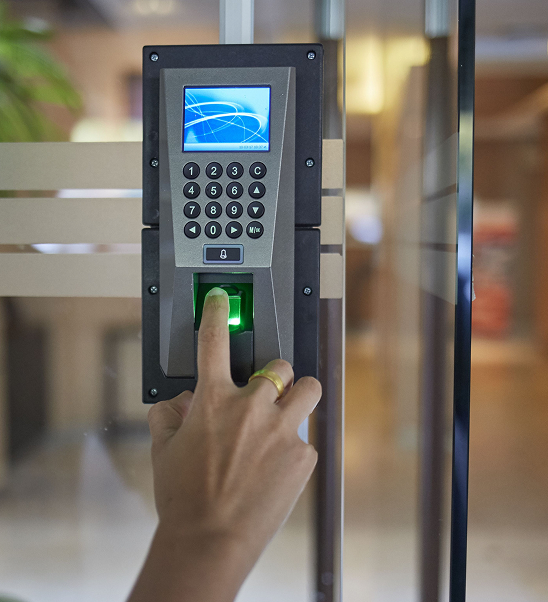
- Readers and credentials: card or fob readers, keypads, mobile credentials or long-range readers mounted where a driver can reach them
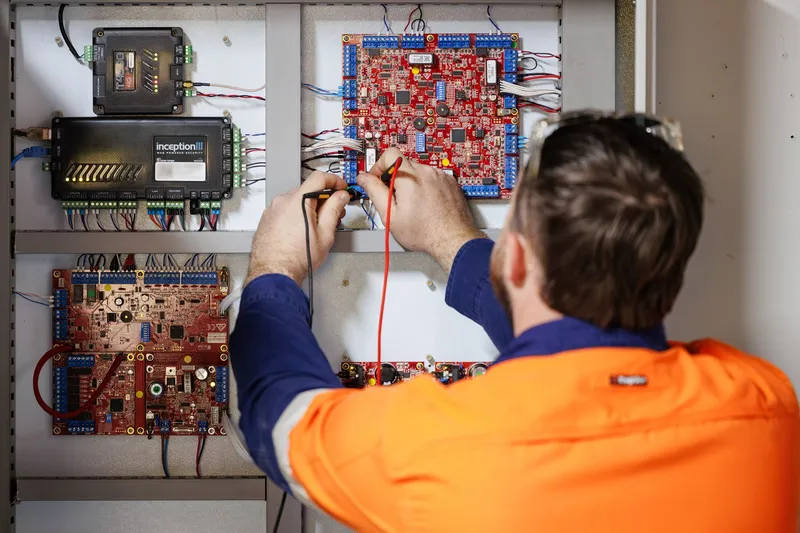
- An access controller that checks each credential against its permissions and sends the signal to open
- An intercom so visitors and drivers without a credential can call reception or security
- Cameras covering the gate, the driver and the vehicle
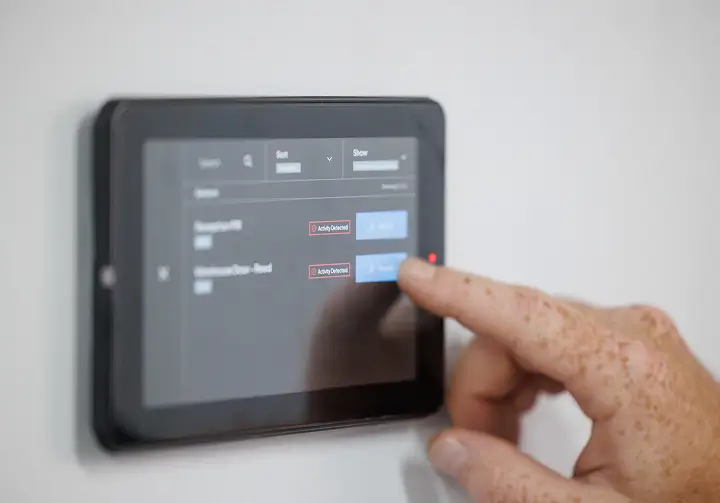
- Management software to add and remove users, set schedules and review entries
Eastlakes provides the access control, intercom and CCTV at the gate and connects them to the gate and operator, whether those are supplied by your gate installer or managed by us as part of a larger project. Either way, the gate becomes part of your wider security system rather than a standalone remote-controlled barrier.
Which entry methods work best for vehicle access control?
Most sites use more than one entry method: one for regular users and another for visitors.
| Entry method | Best for | Watch out for |
| Card or fob reader | Staff and regular contractors | Readers must be in reach from a car or truck window |
| PIN keypad | Small sites or a backup method | Codes get shared and are rarely changed |
| Mobile credential | Sites already using phone-based access at doors | Needs reliable phone signal at the gate |
| Long-range reader | High-traffic gates and fleet vehicles | Tags must be issued and cancelled per vehicle |
| Gate intercom | Visitors, deliveries and one-off contractors | Someone must be available to answer and release the gate |
| Number plate recognition | Fleet and regular vehicles at busy gates | Reads the vehicle, not the driver, so it is often paired with a second check |
A common setup for a depot is card or fob access for staff, a gate intercom for deliveries and visitors, and cameras recording every vehicle that enters. Video intercoms let reception see who is at the gate before releasing it, which matters when the gate is out of sight of the office.
Boom gates, sliding gates or swing gates?
The barrier itself is usually chosen by the gate supplier, but it shapes the access control design.
| Barrier | Strengths | Limitations | Typical use |
| Boom gate | Fast to open and close, suits high vehicle traffic | Controls traffic but is easy to walk around | Car parks, staff entries, inner checkpoints |
| Sliding gate | Strong physical security, closes off the full opening | Slower cycle, needs space alongside the fence line | Perimeter gates at depots, yards and warehouses |
| Swing gate | Simple and suits shorter driveways | Needs clear space to swing, slower in high traffic | Smaller sites and secondary gates |
A reader needs to sit far enough before the barrier that a driver can stop, present a credential and wait without blocking the road. Vehicle detection tells the system when a vehicle has cleared the gate so it can close safely. Cameras need a clear view of the driver and the number plate at the point where the vehicle stops, not just a wide view of the driveway. Many industrial sites use both barriers: a sliding gate on the perimeter that locks after hours, and a boom gate inside for daytime vehicle traffic.
How does gate access connect to the rest of your site security?
Gate access control works best as part of a single system, not a separate remote on a keyring.
- One set of permissions. When the gate runs on the same platform as your door access control systems, a person’s access to the gate, the building and individual rooms is managed in one place. Removing someone removes all of their access at once.
- Cameras at the gate. Linking CCTV installation at the gate with the access control system means each entry can be matched to footage of the vehicle and driver.
- Schedules and after-hours control. Gates can stay open during business hours and lock automatically after hours, with only selected people able to enter at night or on weekends.
- A full audit trail. Every credential used at the gate is logged, so you can see who entered the site and when.
- Wider site automation. Through automation and integrations, gate events can trigger other actions, such as recording, alerts or lighting.
This matters because no single device secures a site on its own. A camera at the gate records who came through but doesn’t stop anyone, and a gate that anyone can tailgate through doesn’t either. Effective perimeter security is layered: access control, cameras, intrusion alarms, fencing and back-to-base monitoring working together. It is the approach we take on government and critical infrastructure sites across NSW, including power generation, transmission and renewable energy projects, where Eastlakes is a registered supplier in the NSW Government procurement system for electronic security.
What goes wrong with gate access on depots and warehouses?
Most gate problems are not about the gate itself. They come from how access is set up, installed and managed:
- DIY or unlicensed installation. Most manufacturers and suppliers void the product warranty if a system is not supplied and installed by a licensed security company, so a fault that would have been covered becomes your cost.
- Choosing the cheapest quote. A low price often means readers in the wrong position, no vehicle detection or no link to the rest of the security system. These are expensive to fix once the gate is in use.
- Tailgating. A second vehicle follows the first through before the gate closes. Gate timing, vehicle detection and cameras all help reduce it.
- Shared PIN codes. A code given to one contractor ends up with many. Over time, nobody knows who has it.
- Contractor cards that never expire. Cards issued for a short job stay active for years. Setting end dates when credentials are issued prevents this.
- Readers out of reach. A reader positioned for a car is too low for a truck driver, or the other way around. Drivers end up getting out of the vehicle or calling for help.
- No plan for a power cut. Gates need a clear decision on whether they stay closed or open when power is lost, and how authorised people get in or out.
- No maintenance. Readers, intercoms and cameras at a gate face weather, dust and vehicle knocks. Without regular checks, faults are found only when someone cannot get in.
What does a gate access control project involve, and what does it cost?
Every site is different, so a gate project starts with a site evaluation. We look at who uses the gate, how traffic flows, what power and data are available, and how the gate needs to connect to your existing security. Project lead times typically range from 2 to 12 weeks, depending on the size of the system and the equipment involved.
Cost depends on the scope. On larger industrial, government and critical infrastructure sites, gate access is usually part of an integrated package of alarms, access control, video intercom, duress and video surveillance, and these projects range from around $25,000 to over $1 million.
Before getting a quote, work through these questions:
- Who needs to use the gate: staff, contractors, deliveries, visitors, fleet vehicles?
- How many vehicles pass through at the busiest time of day?
- Which entry method suits each group?
- What hours should the gate be open, and who can enter after hours?
- Does the gate need to connect to existing door access control, cameras or alarms?
- Is power and data available at the gate, or does it need to be run?
- What should happen to the gate if power is lost?
- Who will manage users, and how will cards or codes be cancelled when someone leaves?
- Who is supplying the gate and operator, and how will they work with the access control installer?
Case study: vehicle sliding gate upgrades for critical infrastructure sites
Vehicle sliding gates are the front line of defence for most critical infrastructure sites. We were recently contracted to upgrade the vehicle sliding gates at a number of critical infrastructure sites across regional and metropolitan NSW, where the existing gates and equipment were aged and failing.
Eastlakes Security & Controls provided full contract and project management, including:
- Removal. Taking out the old, heavy vehicle gates.
- New gates. Procuring and installing new lightweight gates with new motors and control equipment.
- Safety systems. Upgrading the safety systems at each gate.
- Access control and CCTV. Upgrading both to work with the new gates.
The result is improved safety, security and reliability. Access to each site is fully controlled and auditable, protecting the people, property and critical infrastructure behind the gates.
Planning gate access for your site?
Eastlakes is a local, family-owned business that has been designing and installing commercial security systems since 1997. Our directors are Inner Range certified technicians, and we design and install access control, intercom and CCTV for commercial and industrial sites, then support them with ongoing maintenance and a 24/7 breakdown service. If you are planning a new gate or want to bring an existing one into your security system, talk to our team.
Eastsec Pty Ltd, NSW Master Licence No. 000100104

Ready to Strengthen Your Security?
Speak with the Eastlakes Security and Controls team to discuss tailored security solutions designed to protect your people, property and operations with reliable technology and professional support.
Request a Quote